
On a recent trip to Nagano prefecture in late spring, we took a day trip out from Matsumoto to Narai Juku, a heritage town on the Nakasendo way. It's something that had been on the plan for a few years and was way overdue.
Narai Juku can be a very relaxed half-day or day trip, a unique overnight stay, or it can form part of a multi-day hike on the Nakasendo. A day trip allows time for a stroll through the town, to pop down to the river, check out the historic highlights, a little shopping, enjoying a sake tasting, morning tea or lunch. You can even stay overnight and enjoy the peaceful lanes and onsen once the sun sets and the day visitors have gone home.
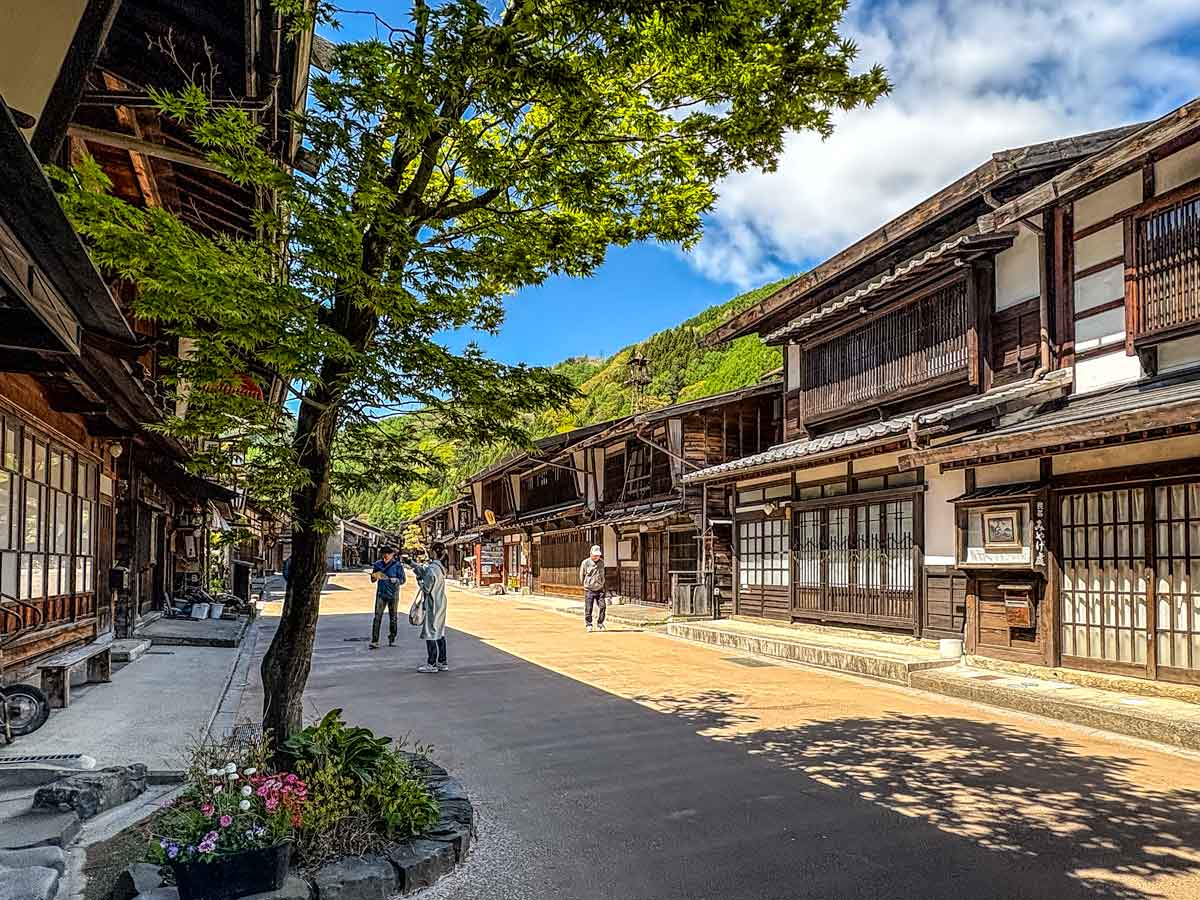
If you want something a little more energetic, hiking between post towns, in this case from Yabuhara to Narai-juku, can be a great window into history. You follow the actual path taken by samurai, merchants, pilgrims, officials and the occasional princess (including my personal favourite, the artistic and diplomatically talented Princess Kazunomiya) in the feudal era. This hike can be easily included in a day trip and we have more information on that below.
Table of Contents
What is the Nakasendo trail?
The Nakasendo Way, or Nakasendo trail as it is also called, runs for 540 km from Kyoto (the old city of Heian) to Tokyo (previously known as Edo) through the mountain route. It was a path used by samurai, nobility, merchants and townspeople as they made their way from the old capital to the new and back again.
Nakasendo was one of the 5 routes that were used during the feudal period to move people and supplies between the two cities. Another you will possibly recognise by name is the Tokaido route which travelled along the southern plains and follows roughly the same route as the Tokaido Shinkansen train line today.
Today the Tokaido seems a far more accessible route than weaving through the mountains but back in those times the wild and unpredictable river crossings in the lowlands often made the high road preferable.
Dive deeper: If you have an interest in this era and are travelling along the Tokaido route, we have tips on including a visit to the Hakone checkpoint in our Hakone guide and walking on a small section of the old Tokaido way if you are planning to visit that region.
Over time the development of the modern road system and train lines provided fast and convenient access between the two cities. This meant employment and populations of the many post towns along the Nakasendo route declined and the historic buildings fell into disrepair; many were abandoned.
It was the foresight of local townspeople in the 1960's and 70's who identified that these towns had a cultural and historic value that needed to be preserved and started the massive task of restoring the towns and buildings.
Today hiking, particularly short hikes, have become very popular in Japan both with domestic and international travellers. Segments of the Nakasendo Way are a great option for hikers and the heritage towns provide a cultural and historic insight that makes them attractive in their own right to day and short stay visitors. The massive effort involved to preserve these towns and the surrounding nature was very forward-thinking.
How to get to Narai Juku?
Matsumoto is a fantastic base and a gateway to the Japanese Alps, the snow monkeys and Lake Suwa but is also a good option for exploring less obvious choices like Narai-juku.
As a base for day trips we tend to prefer Matsumoto over Nagano city, the town has a great feel and for transport you have limited express trains coming in from Tokyo, Nagano and Nagoya and easy options going out to attractions like the Nakasendo trail, Lake Suwa and Kamakochi.
The number of trains from Matsumoto to Narai station is limited but if you take the Shinonoi Line it will take 50-60 minutes and cost Y590. A very affordable day trip for something quite different.
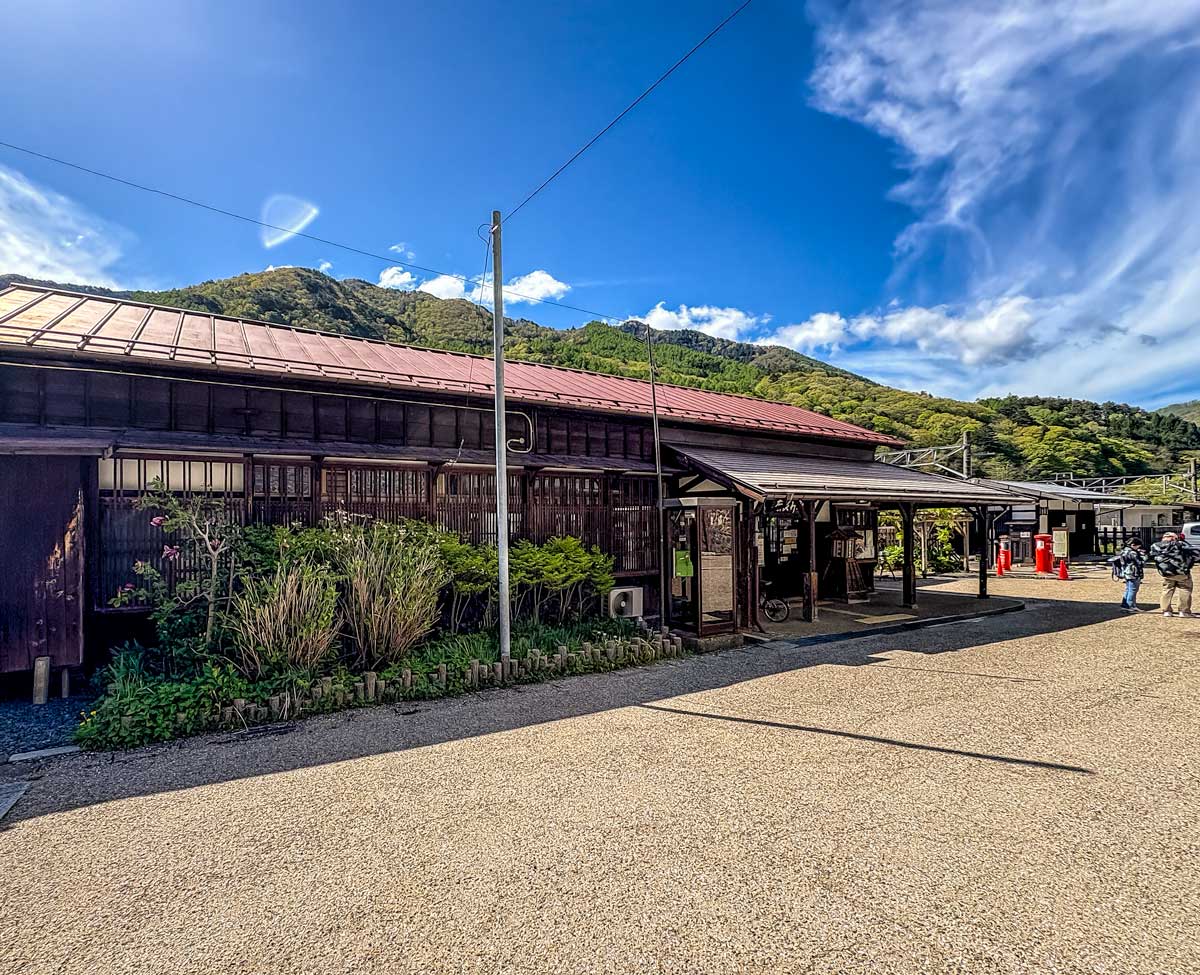
Technically, you do change from the Shinonoi Line to Chuo Line but as long as you get the right train you don't need to do anything, it's just another station stop and you continue on to your destination. If the timing of the direct train doesn't suit you can change trains at Shiojiri Station and it's really not a big fuss. The cost is the same and it won't slow you down much but we prefer to keep it simple where we can.
If you want to make the trip from Nagano city it will take 90 minutes and cost Y3220 because you'll use the limited express train part of the way. It is also possible to come at it from Nagoya on the other side. That trip takes just under 2 hours and costs Y4830.
Things to do in Narai Juku
Narai Juku is the 34th post town on the Nakasendo way. We have visited a couple of towns along the mountain route now and Narai Juku is probably our favourite although we have enjoyed aspects of all of them.
What we like about Narai Juku is that it is less busy and less touristed than other restored post towns. It's also a little easier to get to on a day trip plus we found it very friendly and welcoming.
Unlike Magome, Narai allows some cars to drive along the main street during the day although that use is limited to local traffic. Visiting vehicles park on the outskirts of town. There are also above-ground power lines which some say spoil the nostalgic feel but other post towns like Magome have power, they just excavated to put those cables underground. To me, it wasn't an issue for our experience of either town.
Let's look a bit closer at some of the things to do and the reasons you might include Narai in your travel plans.
The Nihyaku Jizo of Hachimangu Shrine
A short walk up the hill next to the station takes you to Hachimangu Shrine and the nihyaku (200) Jizo. It's not a big detour and is worth making your way up when you are leaving or returning to the station.
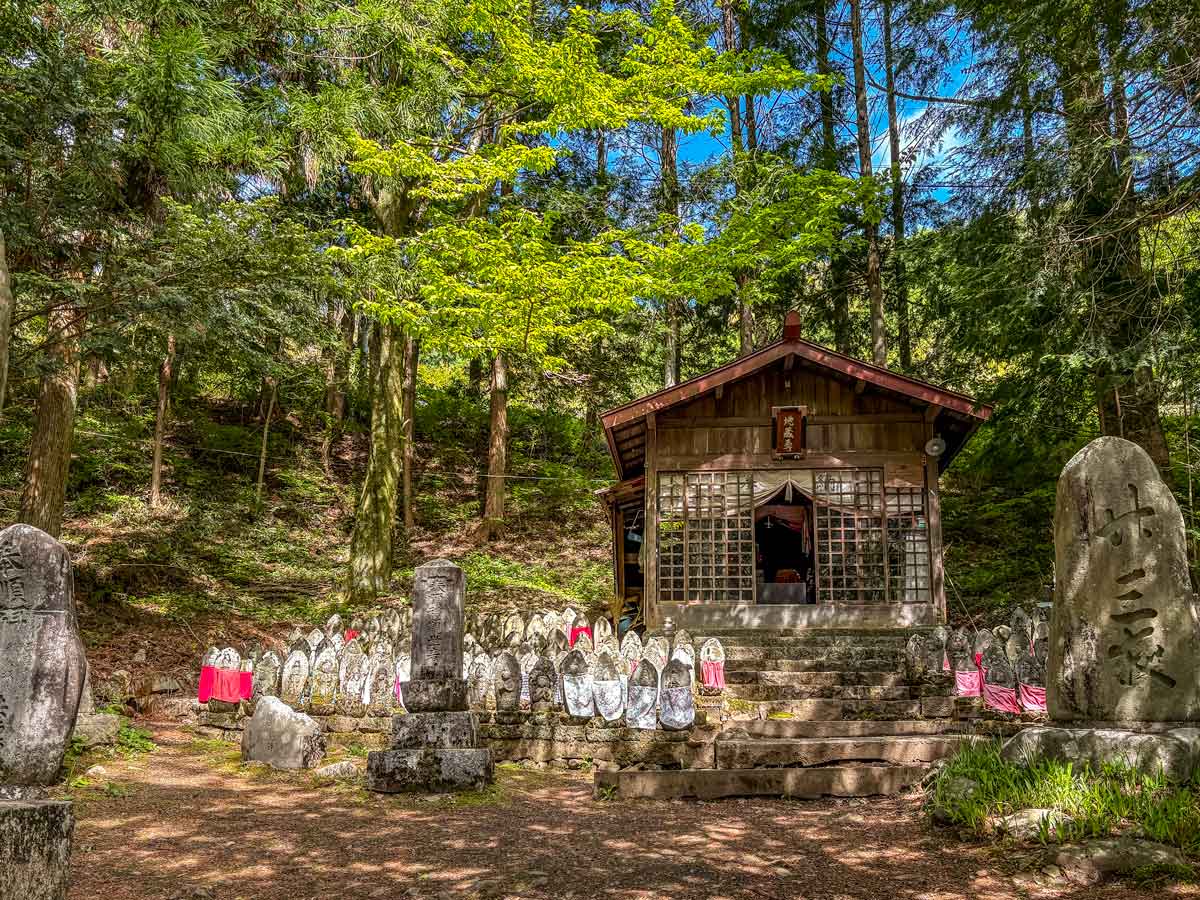
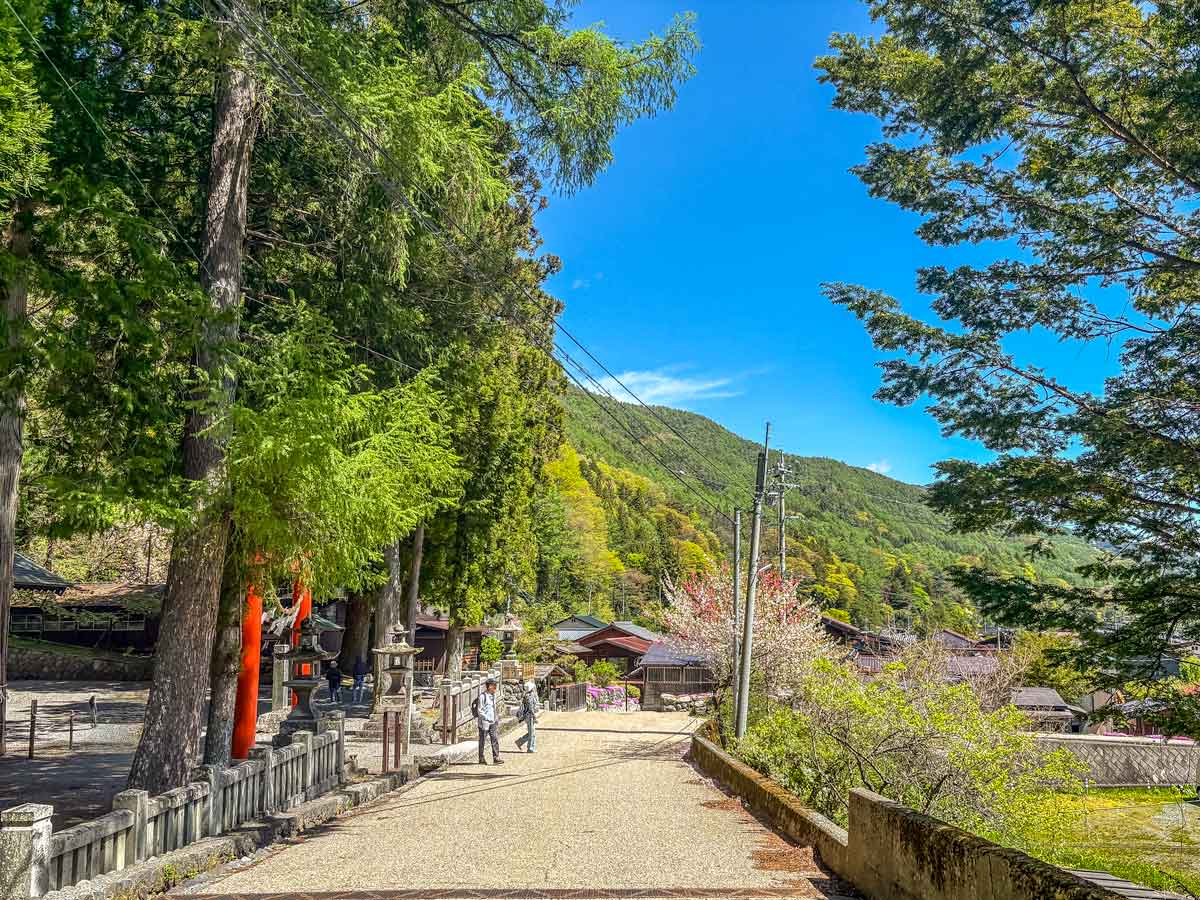
Walking the path beneath towering cedar trees is peaceful and calming, likely reminiscent of the way the whole Nakasendo trail may have felt in times gone by. We were the only ones there and were able to enjoy the birdsong making it even more tranquil.
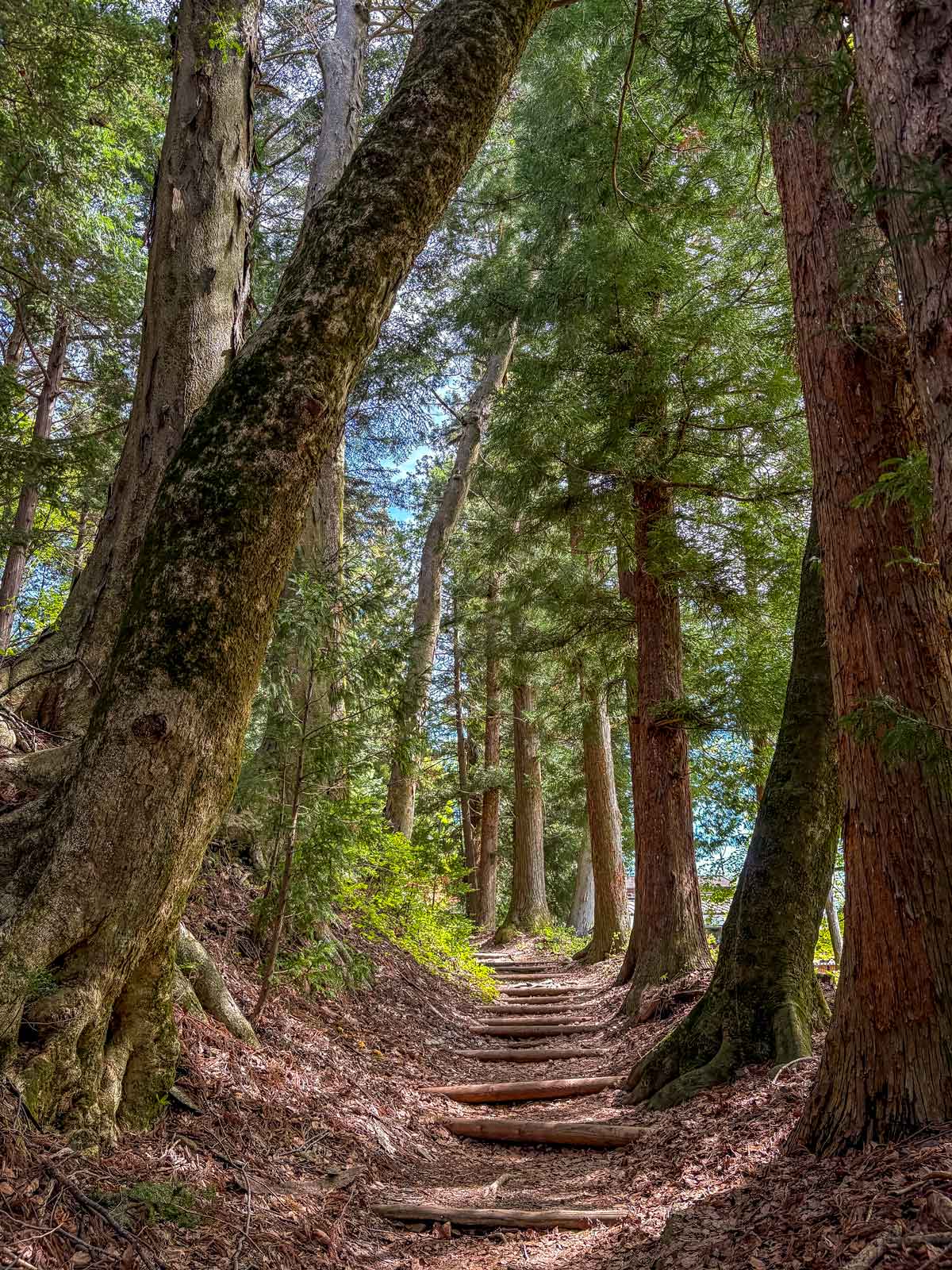
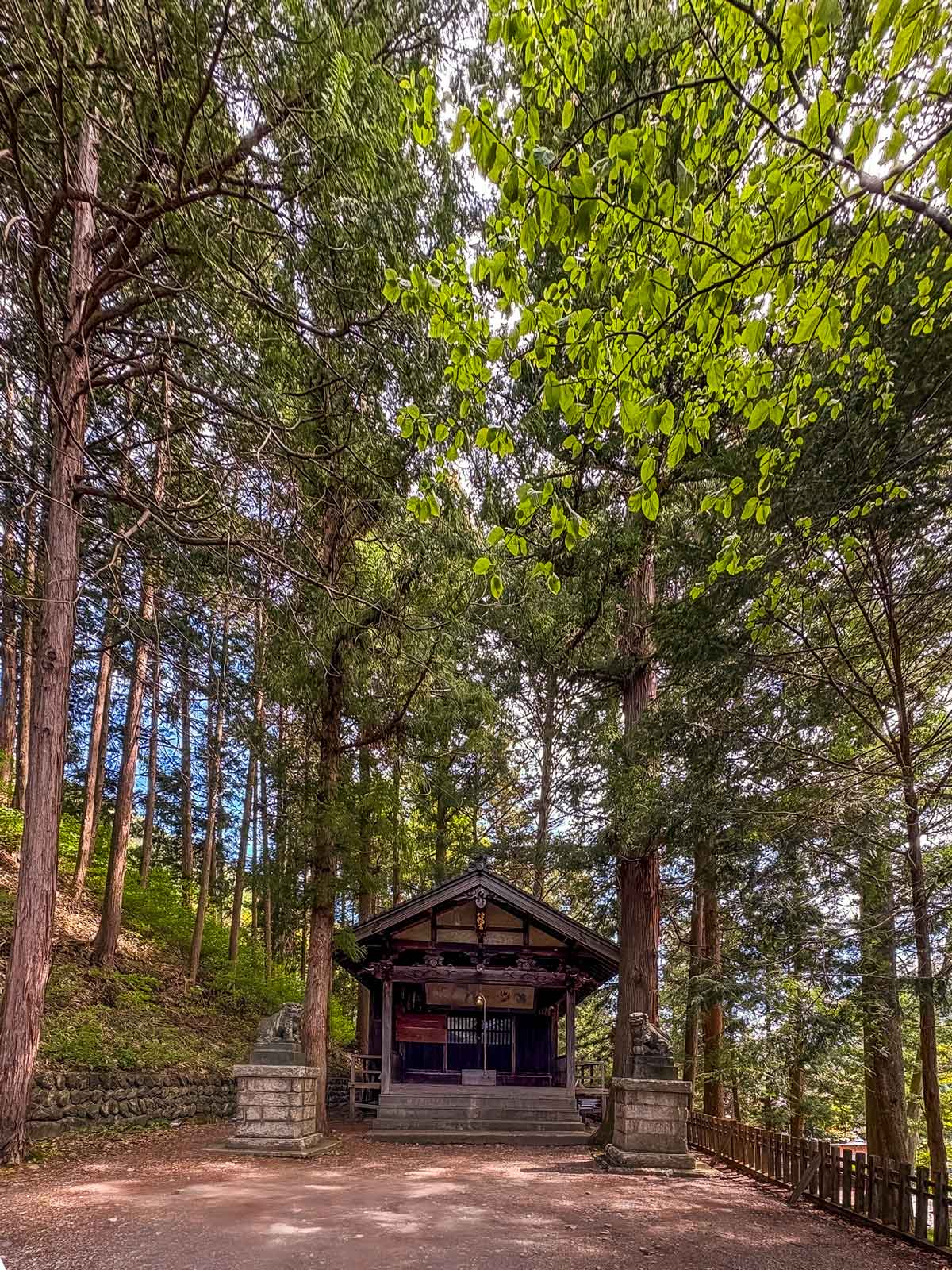
While the shrine is historic, these Jizo statues have been displaced from a variety of spots in the region as roads and the train lines carved their way through the landscape in the Edo period so they have only been grouped here for around 150 years.
Jizo is a Buddhist bodhisattva and is recognised as the protector of women, travellers, and especially children and unborn children in guiding them to enlightenment. Jizō Bosatsu statues are often but not exclusively, used as grave markers, especially for children. The shrine gives the gathered statues a peaceful and permanent place of rest.
The heritage streets
Narai town is located in a narrow valley with the main heritage street running parallel to the river. The station is located right at the lower end of the small town and as you walk a few steps on from the station the preserved streetscape comes into view. It really is stunning.
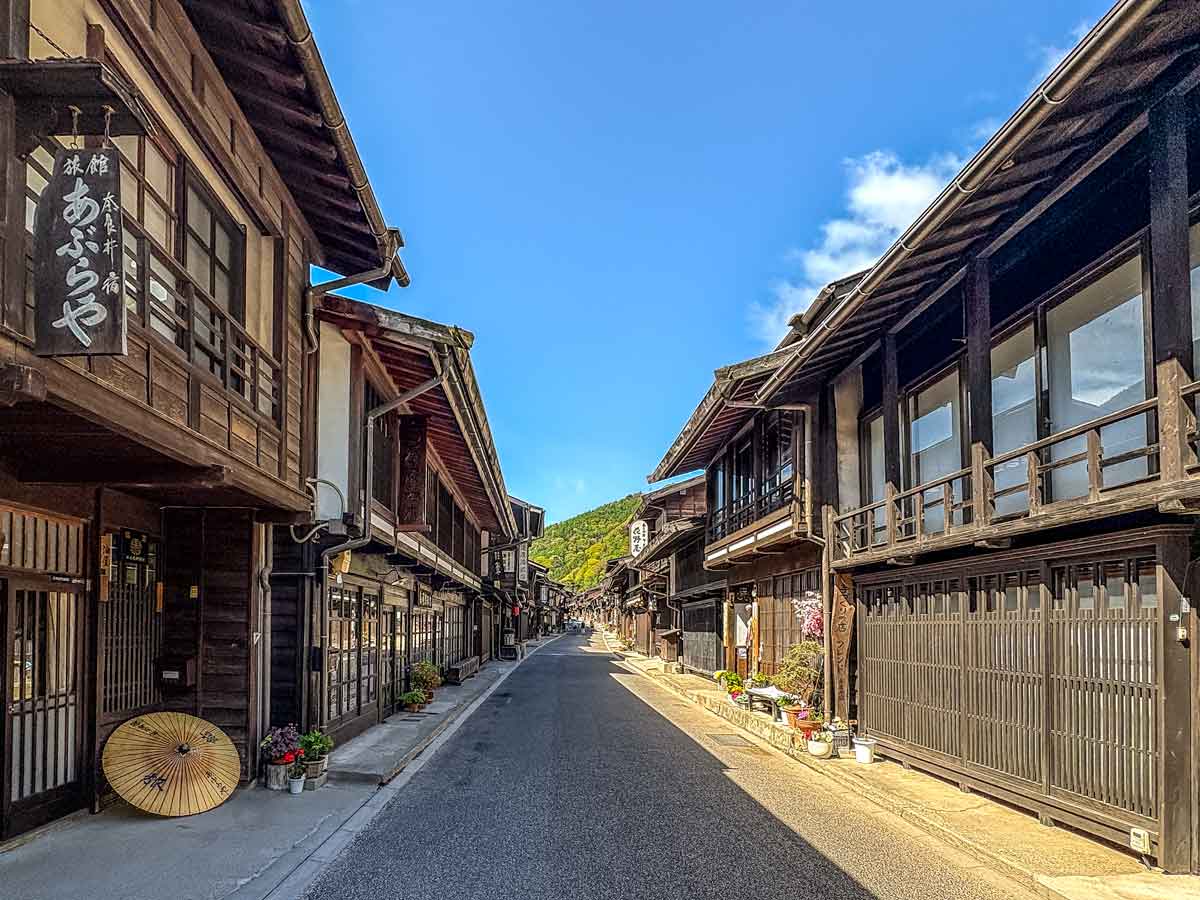
Each of the buildings are occupied with small shops, cafes, restaurants, sake distributors, accommodation and craftsmen. It's somewhere you want to take a slow stroll to browse and take it all in, not rush through. There was some beautiful lacquerware while we were there and other wooden items. Other souvenirs are more intended for the tourist market but were still fun to browse through.
We noticed owls were a feature in the decor outside some places and in stores and one person took the time to explain that fukurou, the Japanese word for owl uses a different kanji but is pronounced the same as 'protection from suffering' so it is a good luck symbol. Tanuku, the Japanese raccoon-like creatures also featured heavily and while they can be a bit naughty around towns, they also symbolise prosperity and good fortune.
Eating and drinking
Make sure to allow time to enjoy the good eating and drinking available around town, both as snacks and meals.
We particularly enjoyed our morning coffee stop at Matsuya Sabo, the couple who run it are very welcoming and if I understood correctly, the charming premises had been in their family for 9 generations. The siphon coffee was exceptional, and there were no regrets about having to walk off the extra calories from those cakes later in the day. It's a tiny place, it may only fit a dozen people fully packed but we were not rushed at all, you feel like a guest, not a customer.
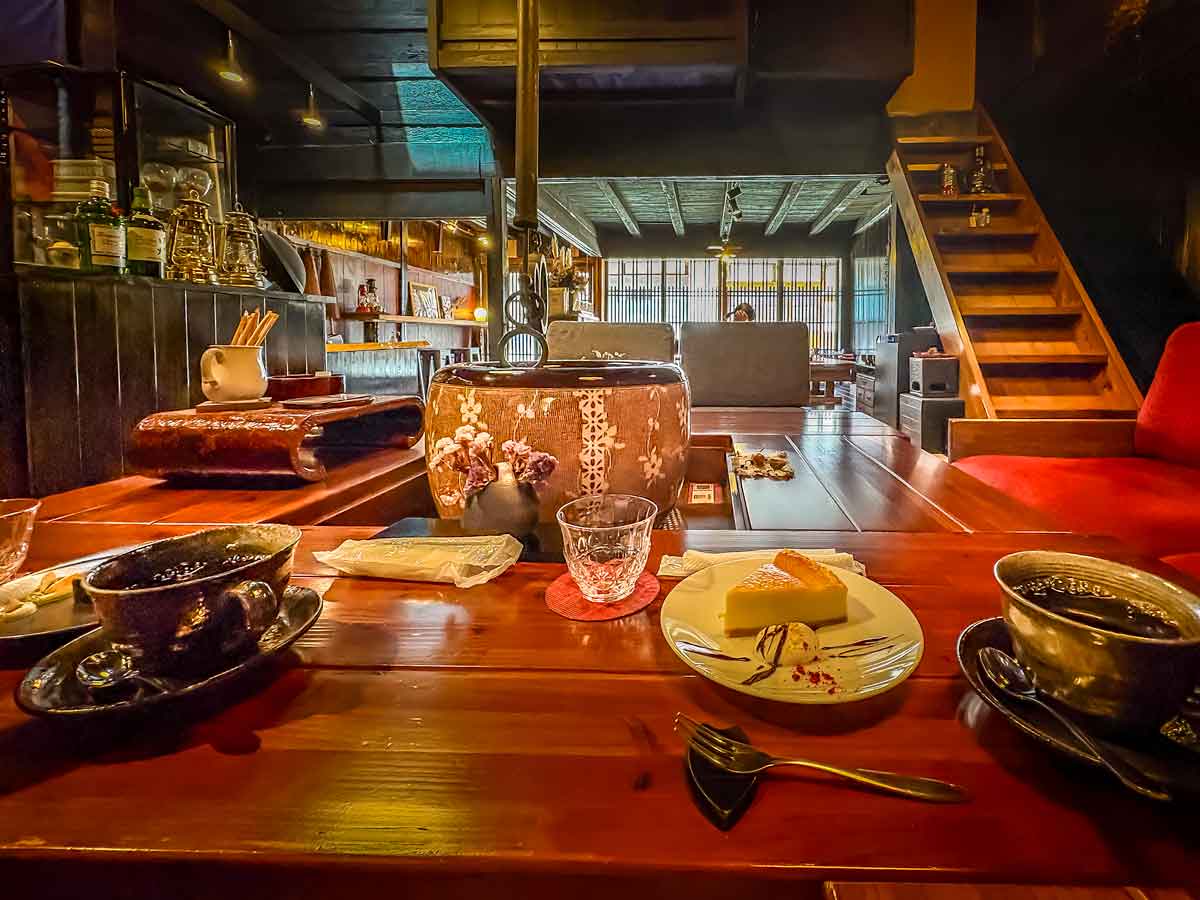
There are a couple of options for lunch while in town but they are mostly open only for the lunchtime window, usually 11:00am - 1:30pm. There can be quite a queue once everyone starts feeling hungry. We usually like to have a slightly early lunch in towns like this especially if we have somewhere specific in mind to eat.
Kokoro Oto is a popular spot with good reason; they feature the regional specialties of soba and gohei mochi done exceptionally well and are a very reasonably priced meal packed with delicious flavours and fresh ingredients. The premises are warm and inviting with tatami mats (shoes off), low and western style tables.
If you don't want a sit down lunch there are plenty of snack options on the main street including piping hot sweet potato, something regional Japan does so well, mochi with local vegetables and ice cream cones of course.
The Yabuhara to Narai hiking trail
If you are planning to do the hike between the two post towns it's usually best to continue through to Yabuhara on the train at the start and hike back towards Narai-juku for a couple of reasons. The pass is easier in this direction with a gentler descent into Narai but there is also more to see and do in Narai so you'll be able to relax and enjoy it after your walk in nature.
The hike between the two towns is 6 km, call it 8.5 km for the station-to-station walk through the heritage towns.
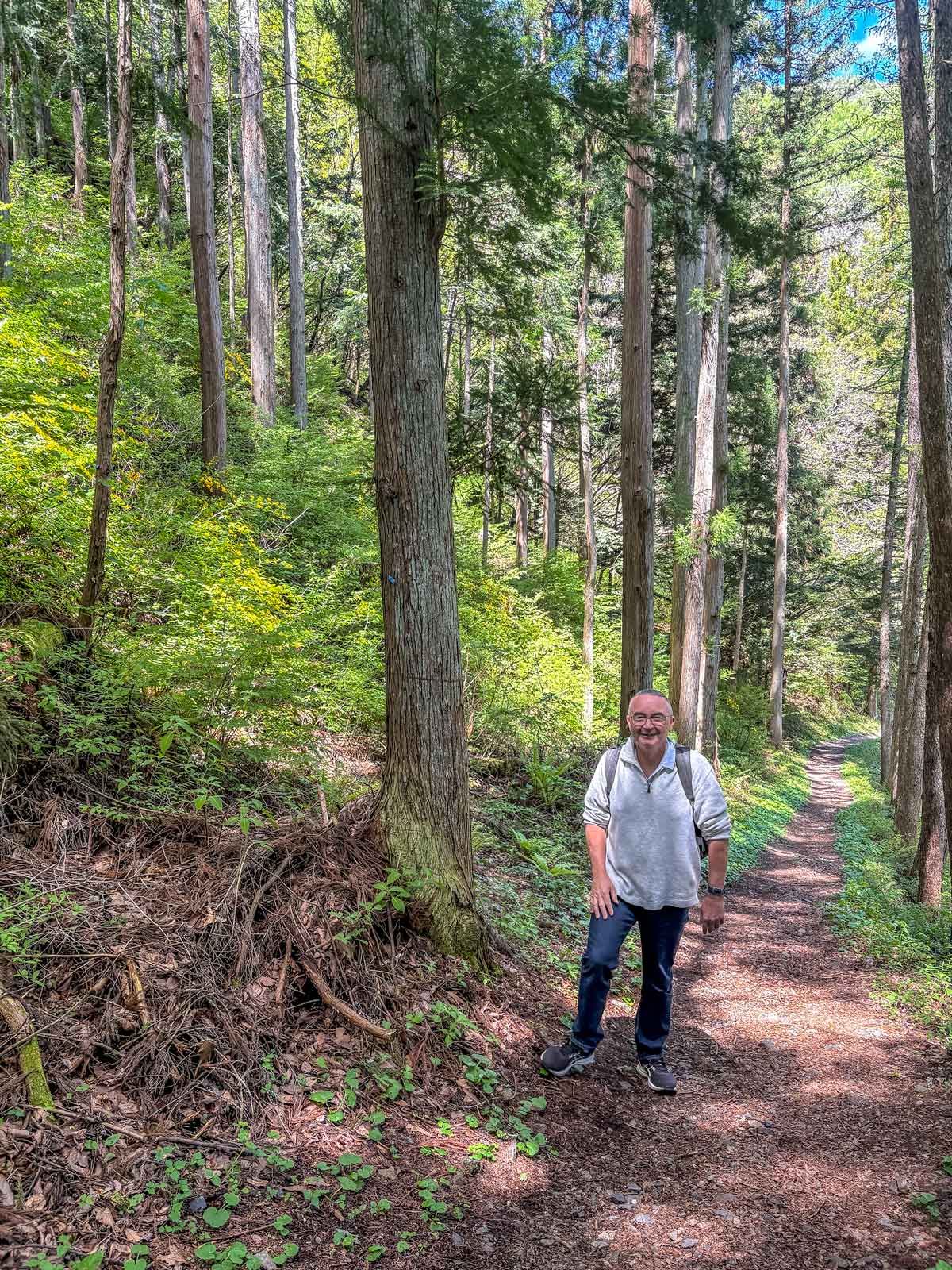
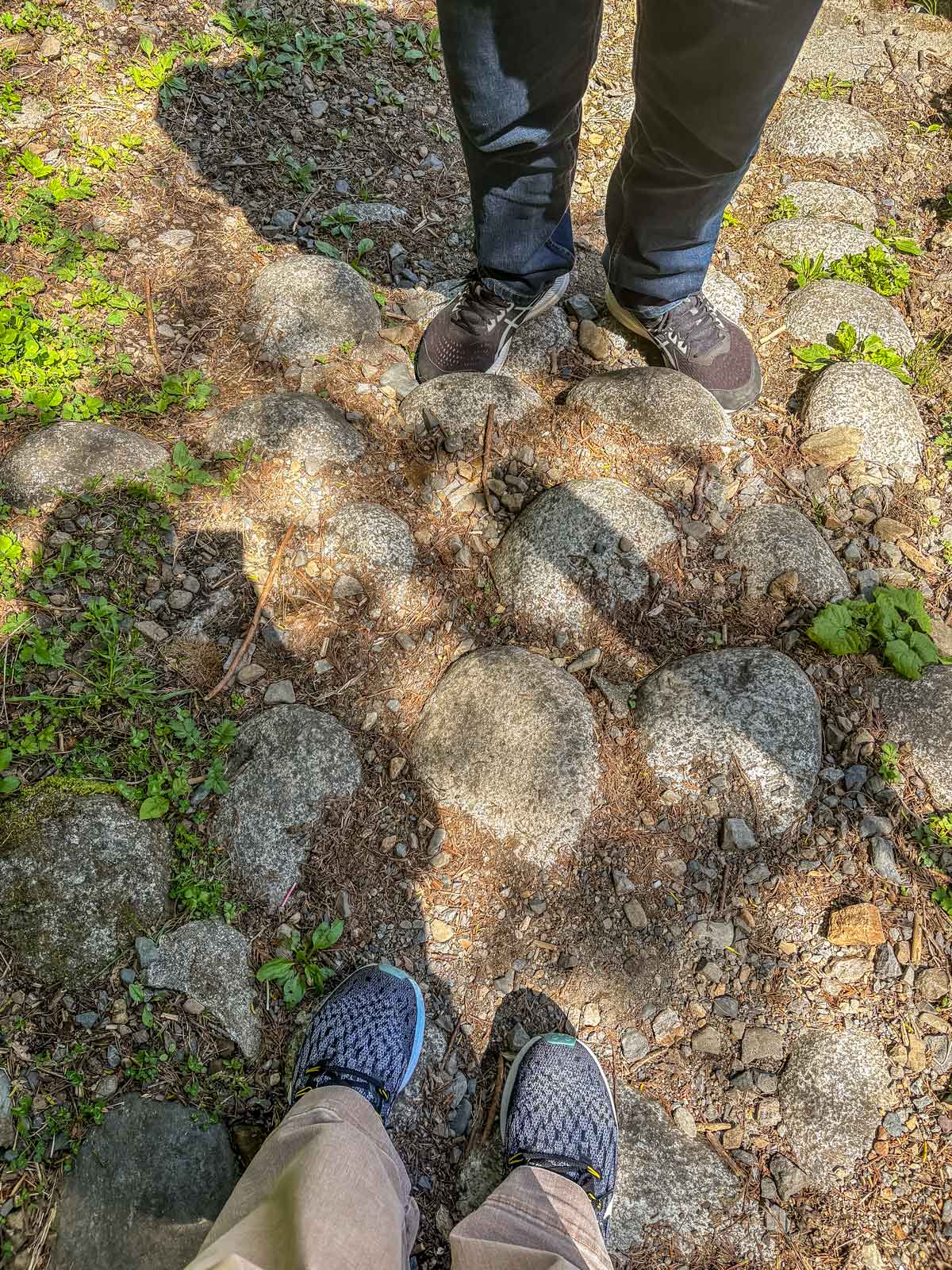
This section of the Nakasendo trail includes the Torii Toge (or Torii Pass) which was considered one of the most challenging sections of the whole trek from Kyoto to Tokyo back in the day. It's a steep ascent out of Yabuhara but should be possible with average fitness if you are equipped for it. It is a steep walk, no climbing gear required.
Allow 3 hours to complete the hike or 4 hours gives you a nice safety margin if you feel the steep section out of Yabuhara is going to be challenging and you don't want to be rushed.
If you are tossing up between the Yabuhara to Narai hike and the more popular Magome to Tsumago trek on the Nakasendo Way there are advantages and disadvantages to both.
We like Yabuhara to Narai as it's a more nature-based hiking experience through the mountain while Magome has road crossings and roadside walking involved, it's not all mountain track. Also the Narai hike being less well known and developed as a tourist destination means there's fewer people and it's very peaceful on the hiking trail by comparison.
Looking at it from the other perspective, you don't have the option of flagging down the bus along the way if you don't want to walk any more. Some people have also mentioned finding comfort in a busier trail with those signposts warning of the potential for bears around. They are all beautiful towns and two good hikes so I'm probably going to sit on the fence and say both are great. If either or both fit with your itinerary, then do it.
We've used eSIM from Travelkon for the 3 trips now and find them a cost effective and convenient solution with excellent coverage even in off the beaten path destinations like the mountains of the Nakasendo. With our 15% discount code (2AUSSIETRAVELLERS) for new customers it's an even better deal. Learn more about our experiences with TravelKon.
Chosenji Temple
Chosenji had a couple of reasons for being on my list of stops in Narai, the Soto Zen temple is likely only a quick stop for most but it's also only a few steps off the main street so not a big decision either.
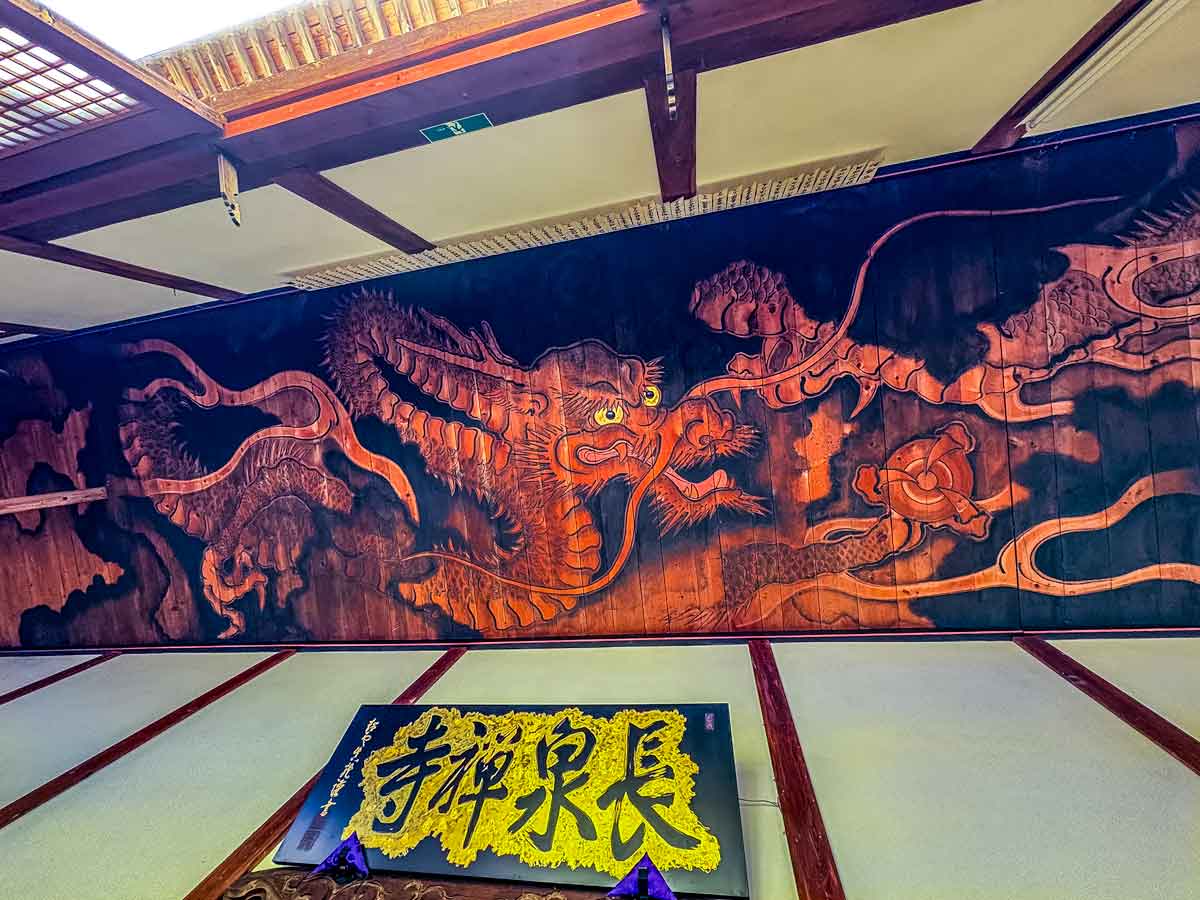
The 20-metre-long dragon ceiling painting just inside the temple doors is impressive. There are a few of these dragon ceilings in Zen temples around Japan, this one allows visitors to photograph the impressive artwork but asks them not to photograph the altar or other parts of the interior.
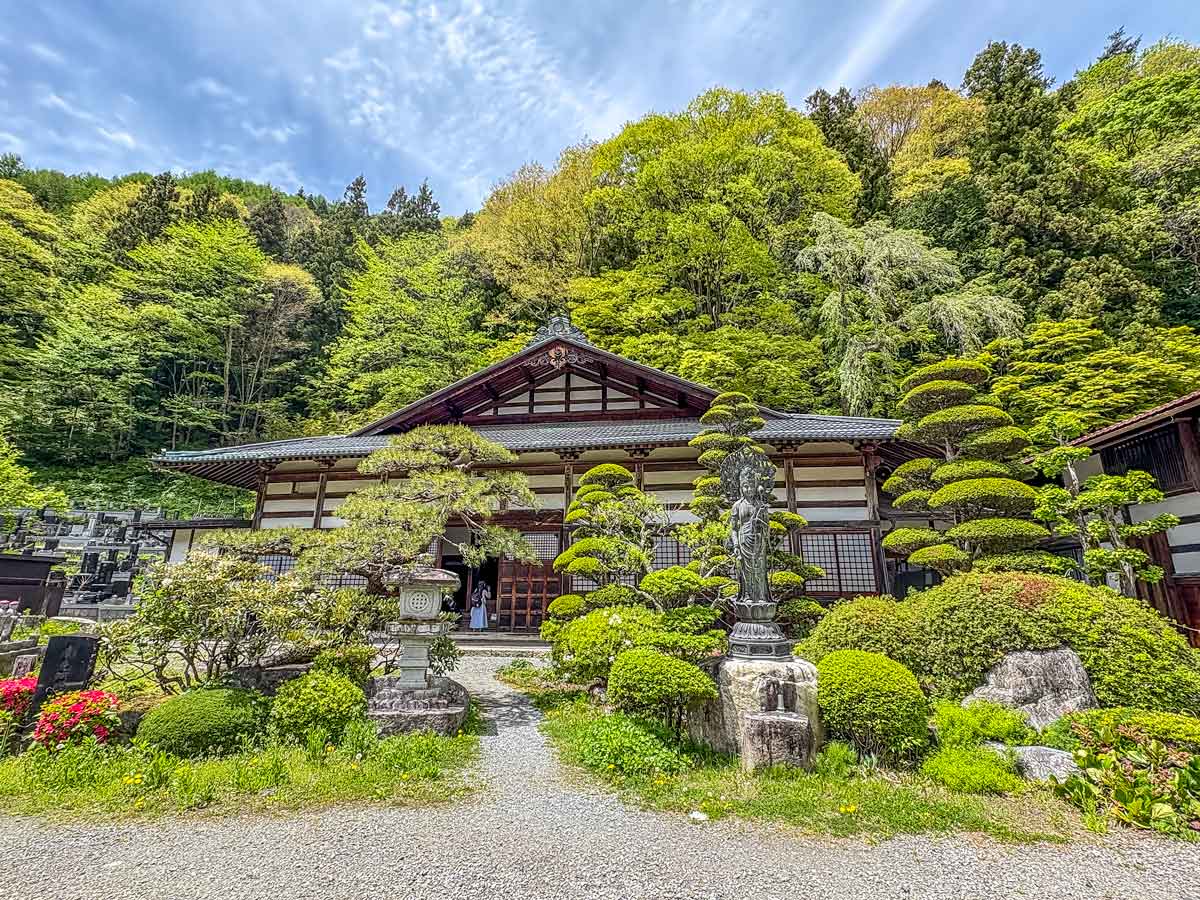
The painting was created by the artist Yamaguchi Gonnokami from Gifu prefecture during the Meiji period, it is thought to have been created around 1866 when the temple was rebuilt after fires at the end of the Tokugawa Shogunate.
The temple itself at this location is much older, established in 1366. The second reason for me wanting to visit is that Zen temples have a long history with the Japanese tea ceremony and Chosenji had an important role during the tea urn procession that took place when the Nakasendo was at its peak during the Edo period. Highly prized and valuable tea from Uji in Kyoto was transported to the Shogun in Edo (Tokyo) along this route, and the procession took lodging at the temple.
Shizume Jinga
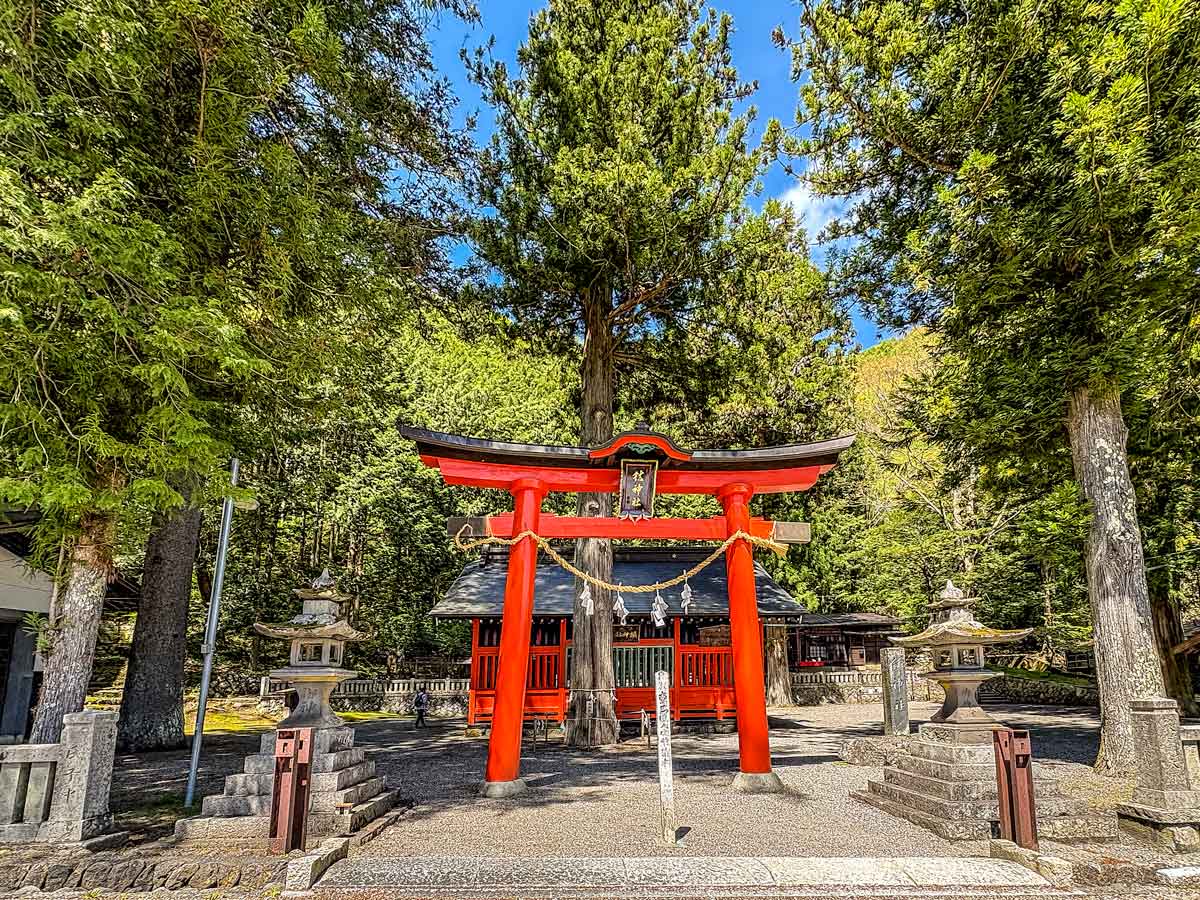
Shizume Jinga is the Shinto Shrine that sits between the edge of the town and entry to the Torii Pass. It was founded in 1618 in the shadows of the impressive cedar trees and hillside. It is said that the enshrined deity is Futsunushi-no-Kami who came from Katori Shrine in Chiba Prefecture to protect the town and those passing through on the Nakasendo way from an epidemic.
When to visit
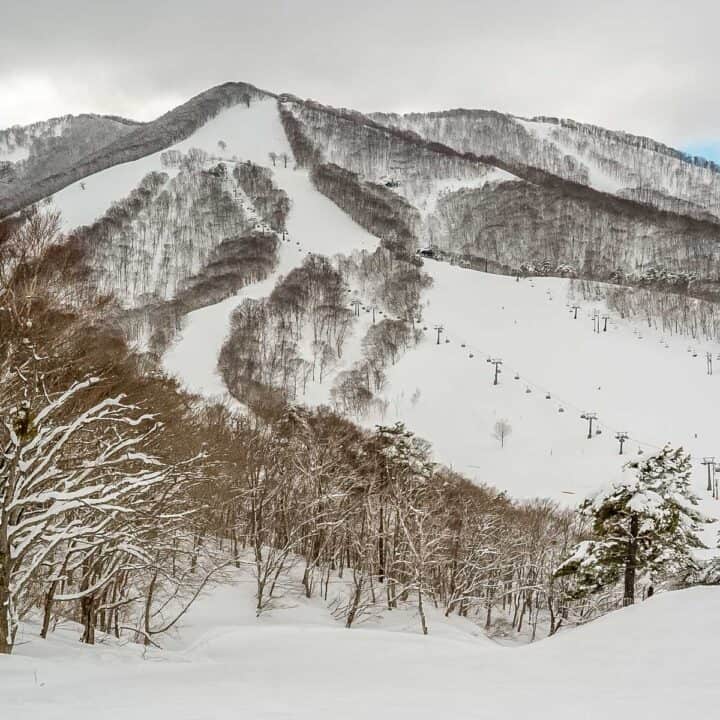
As with most places in Japan, I could put an argument for seeing it in all the different seasons but I'd suggest visiting here from spring through to autumn. In winter in the mountains you'll encounter snowy roads and potentially slippery icy paths. While the fireplaces inside some of the old buildings now serving as cafes and restaurants would be welcoming you wouldn't really get the same experience and there are other parts of Nagano prefecture I'd prioritise for a snow experience.
If you plan to hike the trail then the shoulder seasons are perfect, the spring blooms are a little later here than many other places, in mid May we still had some beautiful wisteria, azaleas and even a few plum blossoms, similarly the autumn colour comes a bit earlier. The summer is also milder up here with daytime highs averaging 24-27ºc and less humidity but more rain than the main cities.
Whenever you choose to visit, Nari-juku offers a quieter and more relaxed pace that would fit well into many itineraries offering aspects of nature, culture and history.
Leave a Reply